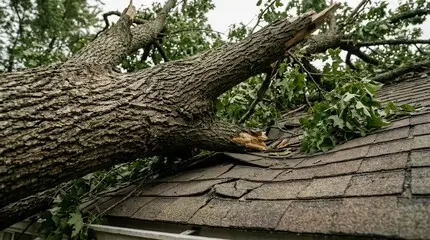
What to Do After a Tree Falls on Your Roof: A Homeowner’s Guide A fallen tree on your roof needs...

If you live in Kansas City, you know hailstorms aren’t just a rare event—they’re part of life. But what happens after the storm clears is what really matters. Hail might not break your windows, but it can do a number on your roof.
The problem? A lot of the damage isn’t easy to see. And if you wait too long to find out, those little dings and dents can turn into serious (and expensive) problems.
In this guide, we’ll show you exactly what hail damage looks like, what to check for on different types of roofs, and when it’s time to bring in a pro. Don’t worry—you don’t need to be a roofing expert. That’s what we’re here for.
Hail damage can show up in a few different ways, depending on your roof type and the size of the hail. In general, here’s what you’re looking for:
Bruises or soft spots on shingles
Dents that knock off the protective granules (you might see black spots)
Circular or random marks 1–4 inches wide
Cracks or chips in tiles
Dents or dings on metal roofing
Damage to roof vents, flashing, or skylights
It’s not always dramatic—but even small damage can lead to leaks if left alone.
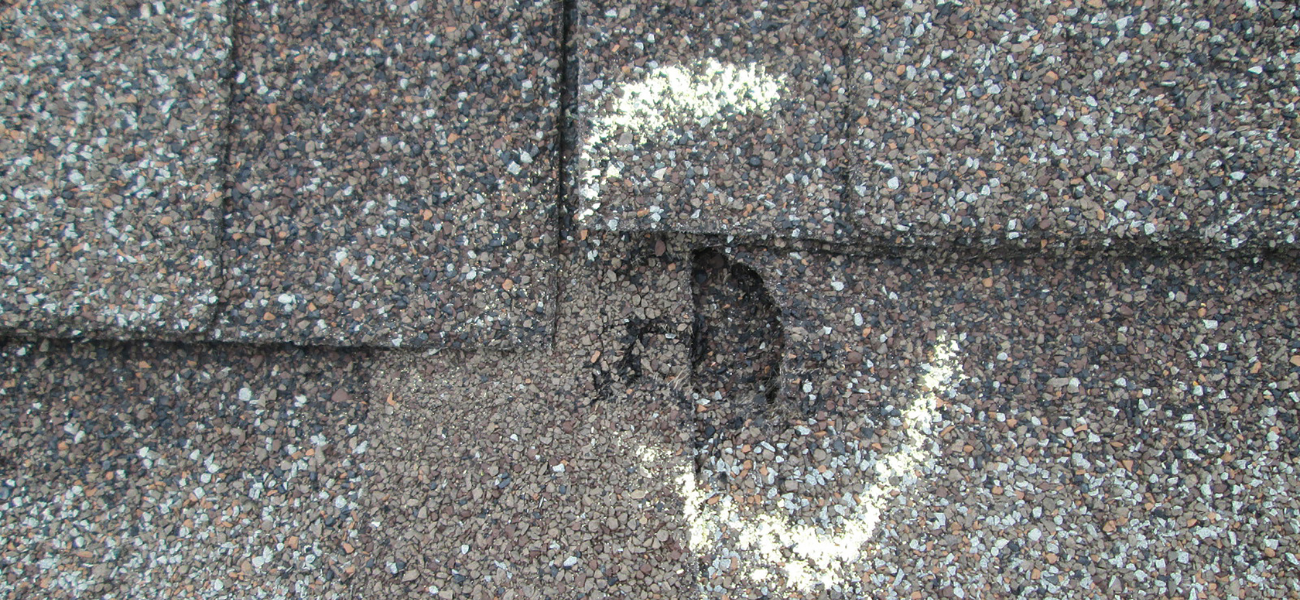
These are the most common—and the most vulnerable. Hail can:
Knock off granules (leaving behind dark spots)
Bruise the shingle so it feels soft
Cause cracks or splits
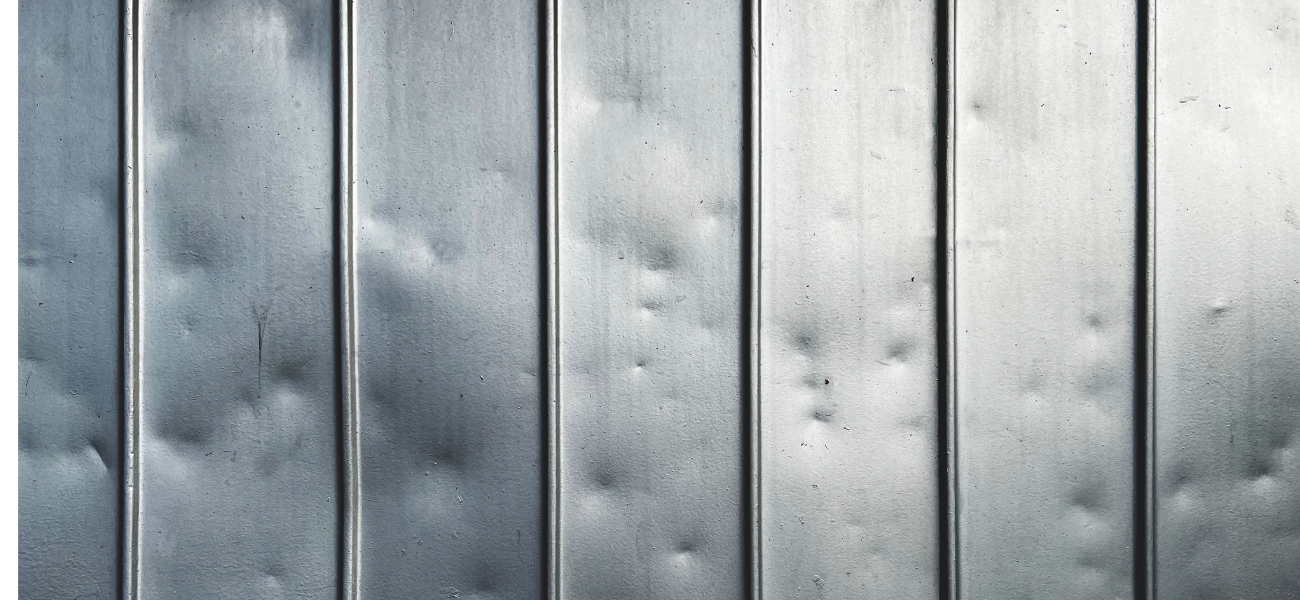
Metal roofs are tough, but even they take a hit:
Dents or pings (especially on ridge lines or seams)
Scuffed or scratched coating that can eventually rust

Clay and concrete tile roofs are more resistant, but:
Tiles can crack, chip, or break entirely
The underlayment might get exposed
Sometimes. If you’ve got a steep roof, you might notice:
Dents on gutters or downspouts
Granules collecting where they shouldn’t be (like in the gutters)
Damage to siding, fences, or even your deck
But most of the time, you’ll need to get up close—or better yet, have someone experienced check it out. There’s no shame in calling in a pro (and it’s a whole lot safer).
Not ready to call anyone just yet? No problem. Here’s a simple checklist you can run through from the ground or with binoculars:
Dark or bald spots on shingles
Granules in your gutters or around the downspouts
Bent gutters or dented vent covers
Cracks or chips in tiles
Water spots in the attic
Even if your roof “looks fine,” some hail damage won’t show up right away:
Soft bruises that don’t leak until the next big storm
Small cracks in flashing or vents
Dented metal panels that look cosmetic—but weaken the roof over time
That’s why a professional inspection is worth it. We know what to look for—and we’re not guessing.
This is a common one. Here’s a quick way to tell the difference:
| Hail Damage | Normal Wear and Tear |
|---|---|
| Shows up suddenly after storms | Happens gradually over time |
| Random dents or bruises | Even fading or cracking |
| Circular, jagged patterns | Straight-line cracks |
Still unsure? That’s okay. Most homeowners don’t climb up and analyze roofs for a living. We do.
Sometimes it does. If the hail broke a shingle or cracked a tile, water might get in right away. But usually, the leaks show up later—after more rain, wind, or just regular weather wears the weak spots down.
Bottom line: a small bruise today can be a big leak six months from now. Catch it early, and you’ll save yourself a ton of stress and money.
In most cases, yes. Most homeowners’ policies include hail coverage, but how much you get depends on:
Your deductible
The age and condition of your roof
Whether you file a claim in time
Take photos right after the storm, even if the damage seems minor. It’s great backup if you need to file a claim later. To learn more about how navigate storm damage claims with your insurance, check out this article.
If you’re comfortable with a ladder and have a low-slope roof, maybe. But if your roof is steep or high? Don’t risk it.
We’ve seen too many folks try to check things out themselves and end up calling us from the ER. Let us do it—it’s free, and we’ll give you an honest answer.
Here’s a rough breakdown:
| Roof Type | How It Handles Hail |
|---|---|
| Asphalt Shingles | Takes the most damage |
| Metal Roofs | Dents, but holds up OK |
| Clay Tiles | Crack or chip easily |
| Concrete Tile | Very durable |
| Synthetic Tile | Tough, but still can crack |
Every storm is different, so even the toughest roofs can take a beating. That’s why inspections matter—no matter what kind of roof you have.
A storm came through. Your neighbors are getting inspections. You’re thinking, “My roof looks fine…”
But hail damage doesn’t always shout—it whispers. And when it finally speaks up, it might be through a water stain on your ceiling or a moldy smell in the attic.
Let us give your roof a once-over—no cost, no pressure.

What to Do After a Tree Falls on Your Roof: A Homeowner’s Guide A fallen tree on your roof needs...

Most people shop for homeowners insurance by comparing a few numbers: premium, deductible, coverage amount. Seems simple enough. But several...
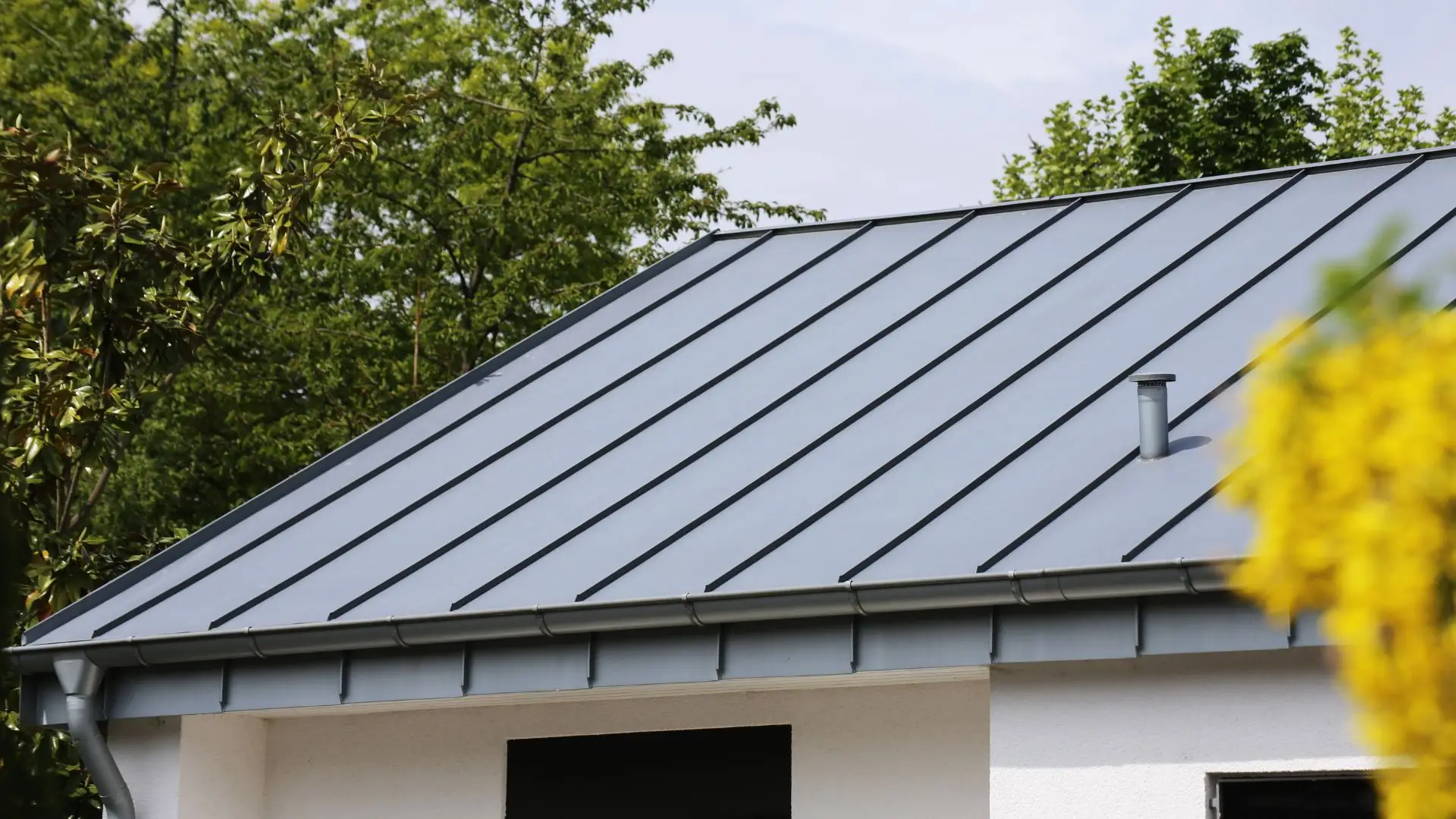
When people compare metal roofs to shingles, they’re usually picturing one type of metal roof. In reality there are a...