Welcome to the Rural Realtor Podcast, where we talk to all things country with a special eye towards country and rural real estate. I’m Bill Gaughan, your host, the luckiest man in the world, but more about that later. Joining me today is my partner, Danicia Duncan.
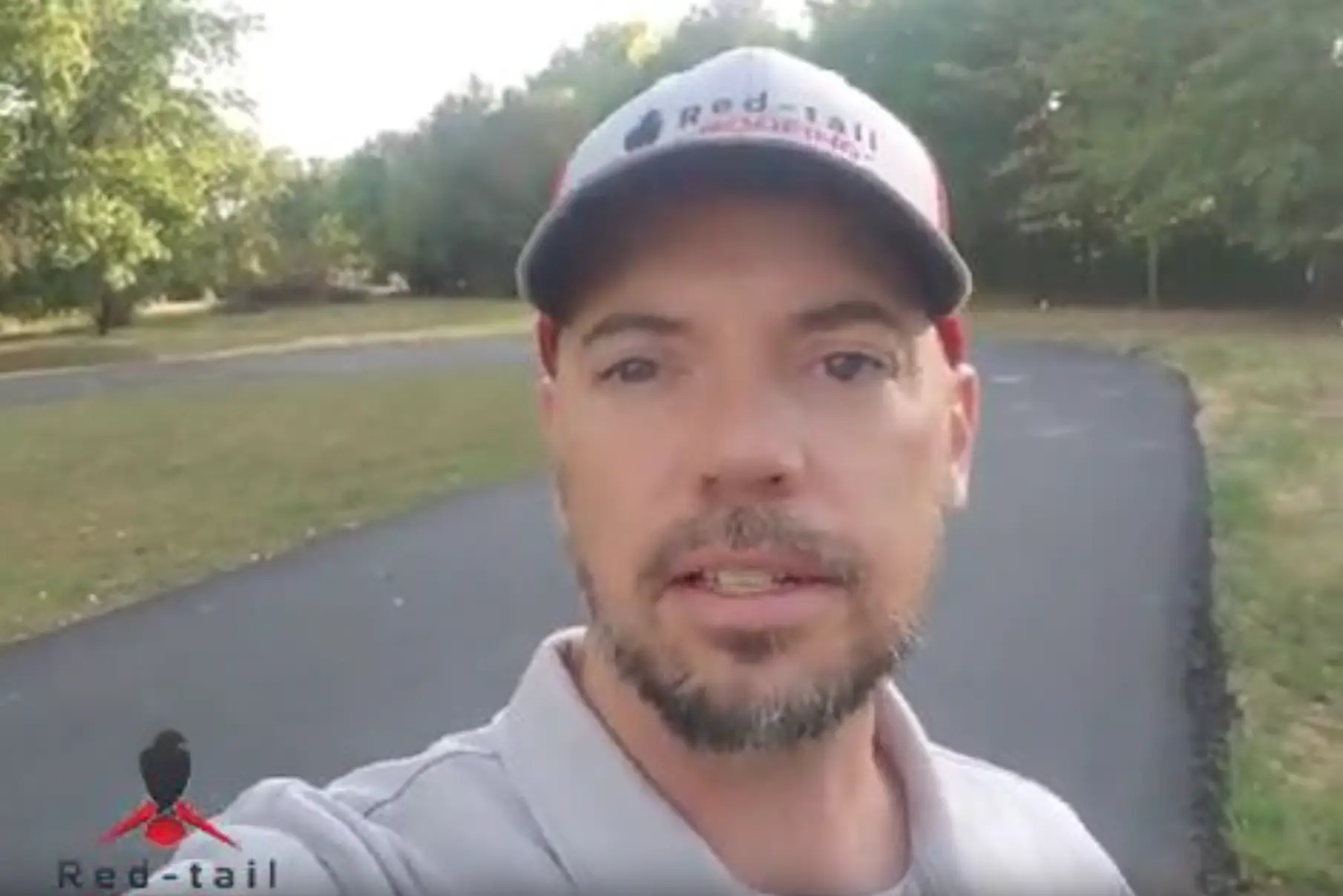
Hello. And we have a special guest from Redtail Roofing, Adam Myers. Hey, hello.
So we’re going to be talking today about roofing issues, which come up almost anytime somebody buys or sells a house. But first, I wanted to remind people that if you go to our website, RuralKC.com, what do people always say about RuralKC.com, Danicia?
It’s the best website in the galaxy. Thank you.
There’s an unbiased, objective opinion. Thank you, Danicia. You bet. But we do try to build on that website a lot of different features that help people that are buying or selling real property.
One of the most helpful is if you check under business and resources, we have a whole list of different kinds of categories of companies and businesses and services that you might need to use if you buy or sell or live in country property. And I wanted to mention what it takes to get on that category list. One, we don’t charge for it.
We’re not trying to sell any advertising. The reason companies get on that list is because we have worked with them personally and been impressed with them, or they’ve been recommended to us by somebody else as being a high quality company or service provider. That brings us back to you, Adam.
That’s why you’re here today.
Awesome.
I had a situation in the last month or so, we had a representative buyer wanted to buy some property north of Kansas City.
The home inspector did their inspection and noticed there was some damage in the roof, probably from hail and that sort of thing. But the seller turned that in late last year and the adjuster had said there wasn’t enough damage to do anything and he wouldn’t do anything to fix the roof. So we were kind of a dilemma.
My buyer obviously doesn’t want to buy home with a bad roof on it. And he talked to the inspector a couple of times and he’d taken pictures, identified some damage, but the seller was of the belief there was no problem. Well, fortunately, the seller had kept the estimate for some roof repair that Adam’s company, Red Tail Roofing, had done.
And so we called Adam up and we sent him pictures of the damage that the home inspector had identified. And that’s the point where we got impressed with Adam. The first thing was he had great record.
He said, well, I’ll just compare this back to the pictures I took in October. Okay, that was pretty good. And I told my buyer, I said, we’re going to have a problem here because you know the roofing contractor, they’re going to say it’s a problem and it has to be replaced.
And you know, the adjuster is going to say there’s nothing problematic or we’re going to get stuck in between the two of them. But that’s not what happened. Adam compared the pictures.
He told me that, hey, these pictures were almost exactly the same as they were, I think, back in October. And that, yeah, there wasn’t a need that this roof need to be repaired immediately. Oh, we were so impressed by that because he could have put pressure on my buyer.
He could have put pressure on the seller, but he didn’t. He opted to do the right thing. And that’s kind of a long introduction, Adam, but that’s why you’re here.
You impressed us. You impressed my buyer with how you handled that situation.
Yeah, I’m glad I could help.
Tell us a little bit about how’d you get in the roofing business.
It was through a friend many years ago that realized that I was getting incredibly stressed out in the restaurant business. So I was a general manager at a big restaurant and it was slowly killing me. So he was a college buddy and he introduced me to a family-owned company that I worked with for a while and began out in sales.
But my background is management, so then I eventually went into the management side of that business and then eventually formed my own business.
Well, your name is a little unusual, Red-tail Roofing. How’d you get that name?
Starting off the company, I guess there was just a lot of thoughts. I wanted to think a little bit more towards marketing and what you’ll see with a lot of roofing companies and I think contractors in general, they don’t know. So they pick their initials.
It’s A, B, C, whatever. And that’s not very memorable. And I wanted to add a personal touch and we’re really big outdoors people.
I live out in the country as well. I’ve got three little ones and we love hiking and camping and fishing and all of that stuff. And my oldest daughter is a real bird girl and we’re always looking at birds and the red tail hawk is just a staple of the Midwest.
And it’s just a beautiful bird that sets up there high. And we always look at them on phone lines and trees and they’re always swooping around our property and it just sets up above and just looks and watches and just kind of has control of its environment. You feel like it’s just a beautiful bird.
And then I thought it sounded good, red tail roofing, and I thought I could come up with a pretty good logo. So it all worked out.
That’s great. So when you have, does most of your business come from when you’re selling homes or I suppose it’s people have a hail storm or some wind storm or some damage. What typically causes people to think they need a new roof?
Either leaks or big storms are the main things. Yeah. My second largest referral source is real estate agents because it does come up.
They’re actively getting the roof inspected. People don’t generally go up on the roof very, very often. It’s dangerous.
They don’t like to do that. So the only time that that really happens is during a home inspection for a real estate transaction or the insurance process when they see other roofs going on in the neighborhood or they know they got large hail. And then obviously the third thing is they look up the ceiling and they see a leak up there, maybe some shingles blown off.
So that’s when I get called. And nearly all of our business is referral based. So I don’t do a whole lot of advertising.
We don’t do door knocking. I’ve done that in the past. I’m not interested.It’s just not something I really enjoy doing. And we are busy enough as it is that I don’t have to do that now. So we just focus on making people happy and the phone keeps ringing.
That’s nice. So what’s your first action when you get a call and an inspector says it’s got a bad roof? What do you do?
In a real estate transaction? Yeah. Well, the first step is to go out there and really have a look at it.
Home inspectors, some are great. Some don’t want to get on the roofs. I don’t blame them.
If you don’t know what you’re doing, it can be dangerous. Some it’s all drone inspections. Oh, nice.
So maybe they haven’t been on there. But what they’re usually looking for is because a lot of them aren’t trained specifically in roofing is they’re looking for obvious, very obvious things. And what’s obvious is box vents that maybe have hail dings all over them or shingles blown off or maybe a piece of flashing that’s sticking out funny or a shingle that’s setting funny.
As far as identifying hail damage on the shingles themselves, a lot of home inspectors probably don’t know exactly what they’re looking at because they don’t do that every day. So they’ll identify the obvious damage and then they will put it in the reports to you guys. And then a lot of times the buyers will freak out.
And then it doesn’t mean the shingles are bad. It’s just taking a step back. They’ve seen something.
Okay, what is that and how does it apply to what you’re trying to get done? So we have to go out and really get eyes on it so we can advise properly.
So you actually climb up and look and…
Oh, yeah.
Oh, nice. That’s good.
Yeah, getting on the roof is really important. There are some that are very steep, very tall, and I’ll get out my drone too. But for the most part, yeah, we’re getting on the roof.
Okay, it’s good to know.
Now, when you say there is a reason for a claim, is it common that you and the insurance adjuster are there at the same time or how do you handle that there’s always just a potential for a conflict of interest there?
Yeah, generally, if I am representing a homeowner and they want me to be out with the adjuster, I am more than happy to do that. So generally, it’s pretty straightforward. Where the conflict comes in is determining damage and determining what each insurance company is going to do.
It’s a very subjective thing. You would think there would be very set standards. But even between adjusters in the same company, they can handle things completely different.
So it’s that in-between moderate damage that you just don’t know what you’re going to get a lot of times. So it’s really about setting expectations with the person that owns the home. If a guy comes out and one day, if he gets the call, an adjuster gets the call, and he’s the one going out this day, it might be a completely different result if you would have called a day later and another person would have come out.
Same company?
Same company. Because it is so subjective. And the adjusters usually want to be helpful. There’s a very small percentage that are very difficult to deal with. And that’s the same with contractors too.
So that’s just people in general, I think. So it can become a little bit strange if a guy goes up there and he goes, well, I don’t see any damage. And then, well, you said there was damage. And then the back and forth. And then sometimes you have to get another adjuster out.
Oh, is that right?
Yeah. That’s a possibility.
Wow.
That’s kind of the homeowner’s option is to get a second opinion.
Mm-hmm. Yep. That’s right.
And I suppose they do the same thing for contractors too.
Yeah. Well, it’s always good. If you’re not 100% on what you’ve been told by the contractor, get a second opinion.
So that’s…
So you spend quite a bit of time with the homeowner to explain everything, what’s going to happen, how the process goes.
I’m very relationship-based. So I don’t care if they have damage on the roof. That’s not…
Whether we sell a roof in this specific situation is really not that important to me. It’s very rare you go through your entire life without needing a roof replaced at some point. So if you don’t need a roof now, that’s what you’re going to hear.
We’re going to tell you how to keep it maintained, and what you should be looking for, and how it all applies to you. And then I’m going to try to leave some way for them to remember me, and be able to contact me in the future if they need me again.
That’s nice. What are some of the common mistakes that homeowners do when they’re ready to replace their roof? What’s the most common mistake that they make?
Cheapest bid. Yeah, that’s one of the biggest ones. That money’s coming from somewhere. And as a contractor, there’s lots of materials, there’s lots of products that could be ordered, and anybody’s going to tell you this is the best.
This is the best stuff out. Oh, this is great. It’s not necessarily the case.
But the other thing is, when the roof goes on, and you’re standing down on the ground and looking at it, whether I did it or somebody else did it, that final product, you’re almost not going to be able to tell any difference. But the longevity of the roof, the product that you’re getting is determined by the details from the install that gets covered up by the shingles. So it’s more than just shingles that you’re putting on it.
It’s that detail work, the flashings, and how you install the shingles, and was the crew skilled, and were they supervised? It’s very common for roofing contractors to order the material, it gets sent out to the address, they send the address to a crew, which they may or may not have a relationship with. The crew shows up, and they put on what they see, and then it’s done.
And then the contractor may or may not send out a quality inspector just to make sure that everything looks good. But remember, the important stuff’s underneath. It’s already covered up.
So if you don’t have on-site supervision, at least somebody that’s there for part of the day making sure that all those details are done correctly, what are you getting? I don’t know.
Nobody knows.
Nobody knows.
You can really kind of almost bury your mistakes, can’t you?
You certainly can.
One of the things that I see in our disclosures when somebody’s selling a house, the age of the roof when it was replaced, and how many layers are on there. Is putting shingles over an existing roof a common thing?
It’s not as common as it used to be. Still by code, you can install a second layer of shingles. I don’t personally do that.
I tear it off. I put a longer labor warranty on there. And the major issue is if I’m leaving that layer of shingles on, what’s going on underneath there?
Has there been a slow leak somewhere? Is it decking all rotted out in a certain area, and you’ve just covered all that up? And then what warranties are you getting from the manufacturer of the shingles?
So the more layers that you put in there, the hotter it can get, the less the roof can breathe, and it’s asphalt. So it dries and it cracks over time. You don’t get as much age out of that overlay.
So it may benefit you a little bit in the short run as far as money, how much it costs. But again, is it a long-term fix for you? Are you planning on living there for a long time?
Do the best thing for your house? Probably ought to tear it off.
Now you mentioned something earlier about the best way to maintain your roof after you get a new roof. I got to be honest, I don’t think I have given a spot. I bet you have your air conditioner though, haven’t you?
Yeah, they got a pretty good deal going. They say get them out every year, and it’s probably a good idea. For roofing, I don’t think you need to do that.
Generally, problems are going to show up pretty quick after you install if there is a problem. So most of the time, you’re going to see it in the first couple rains. But over time, some things that you can see are nail pops.
So from hot and cold in the Midwest where we live, expansion and contraction, sometimes it can push those nails back up through the shingle. It’ll eventually wear through the shingle. That could sit there for years and never leak, or it could just suddenly start leaking.
Some minor parts of the roof are protected by caulk. And if you use a high-quality caulk, it’s going to last a while, but you’re still talking seven, eight, nine years, and then it’s going to set in the full sun, it’s going to crack, and it’s going to fall off. So if your roof has done well for quite some time and it’s 10 years old, it’s probably a good idea to have a roofing contractor that you trust come and check it out.
You might be able to catch some of those issues down the road. You might be able to catch some shingles that the seals have released, and they’re not sticking there so solid. You know, you get a really strong storm.
If you’ve ever been out in the yard and some people occasionally see that, and they’re like, wow, the shingles are flapping around. Well, you’re close at that point to just losing patches of shingles. And you can fix that up front and extend the life of your roof.
It’s good to know.
So you offer that service. They do come out and just take a quick look at your…
Yeah. My first evaluation, I usually don’t charge anything for. If I do anything for you, there’s going to be a minimum charge for it.
But usually my first trip out to your property, I’ll tell you what I think, and I’ll give you advice and tell you if the storm damaged and how much age you have left in the roof. And if I can help you, great. And if not, then maybe I made a new relationship.
Yeah, that’s so nice. They’ll give you a referral.
Or they’ll give me a referral. Yeah, that’s always much appreciated.
What’s your trade area?
It’s pretty large around Kansas City. I’m not a travel guy. I don’t chase the storms around the state or multiple states.
I’ve built this entire business to avoid doing that. That’s why we are so relationship-based. So if I start heading out to Columbia or St. Louis or Nebraska or whatever, now all of a sudden, when your customers call me, I’m not going to be around to be able to help them. So we stay around here, but we’re up north. I mean, we’re up, geez, St. Joe, out to, we were doing quite a bit in Lawrence last year, down to, I don’t know, Spring Hill. I’m just thinking of places that we’re working now.
Out to- Yeah, it’s a pretty wide circle around Kansas City.
It kind of sounds like where we sell.
Yeah, exactly. That’s what I was just thinking. That’s good to know.
Yeah, that’s our trade area. It’s a great circle around the metro area. So what’s the best way of, if somebody had a question, what’s the best way to contact you, Adam?
So my, you can call the company phone. That’s, you want the number?
Yeah.
Okay. So that’s 816-200-1845. You can look at our website at redtailroofing.com and there’s a hyphen in there. So it’s red-tailroofing.com. We put stuff on Facebook, so you can find us on there. And I have a YouTube channel that I try to do videos occasionally, informational videos.
I’ve been a little busy lately, so I haven’t been able to do too much of that.
We know that feeling. Yeah.
It’s been really busy since March. There was a really big hailstorm in March that hit all over the city. And I’ve been struggling to keep up with normal parts of the business.
So my social media has suffered, I would say.
Right. I hadn’t thought about that. Yours is a seasonal business to a certain degree, isn’t it?
Yeah. It can be very seasonal.
Back when I worked for the other company, it was pretty much based around insurance claims and not so much around relationships. And then you’re just sitting around waiting for storms. Now I am busier year-round because you’re selling roofs in the winter, or selling houses in the winter.
So I’m still getting calls from my contacts like that. So I’m not near as seasonal as I used to be. But if a big storm comes in, it gets crazy.
It’s very busy.
Is there anything you’d like our viewers and listeners to know about that we haven’t thought about? Is there something else that people ought to know about their roofs and roofing companies and contractors that we haven’t covered here that you’d like to share?
I’m going to say the major questions that I get are about insurance. So if you’d like to know how that works in reference to roofs, I can give you a little rundown on that.
Okay.
Okay. So insurance, first of all, is changing a lot. In the next two years, you’re going to see the biggest change in insurance that we’ve seen in many, many years.
One of the previous changes was when they used to come out and they’d have fairly low deductibles. You might have a $250 deductible or $500. Eventually, you got up to about a $1,000 deductible.
And they used to come out and make you get different estimates. And then they would maybe take the average of those three estimates. And that’s how they’d write the claim.
They’d take out the deductible, give you a lump sum check. Well, they don’t do that anymore. So that was a pretty big change.
Now they do something similar, but they write the estimates now. So the adjuster has a software that they use to write the estimates, but they’re going to it. They depreciate those.
Let’s say you have a $20,000 roof and they depreciate it by, I don’t know, 30%. So they might take $6,000 out of that $20,000. Now you’re down to 14.
And then they would take out higher deductibles. Now you’re seeing 1,000, 2,000. And you’re going to be seeing more in the next two years, higher than that.
But let’s say they take out another $2,000 and they give you a first check for $12,000. Now you have to prove that you spent the money and you can get that depreciated amount back. And that’s what a lot of people don’t understand.
They get that first check and they think they have to work within that. No, they didn’t give me enough. Well, just relax, calm down, get you a contractor that really understands that process.
And for the most part, you’re going to be okay. All you have to do is prove that you spent that $20,000 by sending in an invoice. They release that depreciation back to you to finish paying for the job.
Now you’re still at your deductible, but you’re not out what you thought you were going to be out. So that’s really big. Now what’s happening is the big change is insurance companies are really hurting right now.
So they say, maybe, I don’t know, but they’re not making as much money as they used to be because prices for construction, I know specifically for roofing, have gone up 30 to 40% in the last five years. And their underwriters didn’t write premiums to cover that. So they’re getting hammered right now.
And roofing is their major loss as far as dollar amounts. So what they’re doing to combat that is now you’re going to get higher deductibles, you’re going to get percentage deductibles. And that’s a percentage of the insured home value.
So if you have a house that’s insured for $500,000 and you have a 2% deductible on a $500,000 house, you’re looking at a $10,000 deductible. So that’s a lot different than $1,000 like it used to be. Plus now they are going to be writing more policies that are called ACV, actual cash value.
And that just means, I just explained how that depreciation works, right? That’s a full replacement cost policy or an RCV policy. An ACV policy is the exact same thing, except you do not have access to that depreciation.
So you might have a very high deductible, $6,000 to $10,000 deductible, and you’re losing out on the depreciation if your roof is over 10 or 12 years old. So you’re out of pocket on a $20,000 roof, might go to $15,000 instead of $1,000. And it’s going to catch a lot of people off guard.
If as a homeowner, you are getting a policy change packet in the mail, you’re not going to read it because it’s written by lawyers and you don’t understand it for the most part. But when you get that, call your agent and ask them what it means, because most likely that’s what it’s going to be. It’s going to be something like that in the next year or two.
Wow. That’s good to know. Really good to know.
I’m glad you’re here, Adam.
Yeah.
Well, and one more thing that you can do right now is it’s going to be really important before that happens. Insurance companies cover certain things that happen to your house. It’s not an insurance policy against the roof getting old.
That’s why if there’s a hailstorm, they’ll cover that. If it’s just an old roof, they’re not going to pay anything because that’s your responsibility as a homeowner to keep up your property. Even if they changed your policy right at this instant, we had a giant storm in March, so March 13th or 14th.
The policy that was in place at the time of the storm applies. Let’s say your policy already changed, but the storm is in March, they’ll look at the policy in March. If you still had the $1,000 deductible and all the coverages, that’s what you’re going to pay.
If it’s at all questionable and you’re just putting it off, don’t wait for a year. With most companies, you have a year from the date of the loss to report the storm, to report the damage. Some companies, you’ll have two years.
Most companies are one year. Do it now. If you can get a reset right now and you can get a roof that’s going to last you 20, 25 years, it’s a big difference.
Yeah. That’s good to know.
When you hear about, that is great information.
It is.
I hope our listeners were paying close attention to that. We hear stories about, not stories, but you can buy a 50-year roof or a 30-year roof.
What’s typically the difference?
That was kind of a holdover from before. Generally, you would have a 20 or 25-year roof. That’s a three-tab shingle.
You might be familiar with shingles somewhat, but they would usually have a 20 to 25-year warranty. That’s just warrantied against manufacturer’s defects. It’s not telling you the roof is going to last 20 to 25 years.
A standard laminate shingle, a lot of people will call those Timberline shingles. Timberline’s a brand. It’s not a kind of shingle, but that’s how they know it because GAF created the first laminate shingle, so everybody calls it the Timberline.
Let’s say that’s 30-year. That’s a standard laminate shingles, 30-year warranty. That’s covered against manufacturer’s defects, but in the Midwest, which you can do to figure out how long it’s going to last, basically you take that age, cut it in half, and add another five years or so if it was a good product and a good install.
You should be getting 15 to 20 years out of a 30-year laminate shingle. What they would do, they’d have a 40-year shingle and a 50-year shingle, so they would add more asphalt. They were thicker usually.
That’s how they got those ratings. Those shingles wear out because the asphalt dries out in the sun over time. If you add more asphalt, you just have more material to work with.
It doesn’t dry out as fast. Now, all shingles basically say lifetime warranty. It doesn’t really mean anything.
You’re still in that 30 to 50-year range. Some of the designer shingles are maybe 50-year, but again, you’re not going to get that out. You’re still in that 20, 25-year range for an asphalt shingle.
I just don’t see many that are over 25 years old. If they make it to 20, between 20 and 25, you’re going to be fighting blow-offs. You’re going to be fighting granule loss.
You’re going to have some leaks pop up in that time. Great information.
I asked you the question, did they have anything else to tell us about? I’m going to ask one more time. Is there anything else we ought to cover that we haven’t because you have certainly been a wealth of information.
You focus on rural properties. I get a lot of questions about metal roofing and rural properties. If you’d like to know about that, I’m all ears.
We do get questions about that all the time.
There’s different types of metal roofing. You’ll see what we would call R-panel or AG-panel.
That’s typically what you’re going to see on a metal outbuilding. That’s known as an exposed fastener system. You’re taking a sheet of metal that goes all the way from the ridge down to the eave, and then you’re screwing a whole bunch of holes through it with the screws.
The screws are exposed. There’s a little silicone grommet that goes on the bottom of the screw.That’s what keeps water out of that hole.That’s one thing that you got to consider. A lot of people think you’re putting tank armor up on top of the roof and it’s just going to last for a lifetime. It’s just not the case.
There are metal roofs that will last a very long time. There’s different kinds of products. There’s standing seam where it’s all a hidden fastener.
Each seam is put on with a clip and fastened down. The next panel comes over and overlaps that. Now you don’t have all those screws up on top.
If you choose a thick gauge metal, you can really get some long life out of it. The problem is they’re very expensive, labor-intensive. Yes.
Different crews, too. You’re paying the crews a lot more, an experienced crew to put it on. The detail work is very important.
What you do underneath the roof is very important. Typically, you’re seeing standing seam roofs on maybe a bank, maybe a church. Right.
Really nice houses. A lot of times you’ll see them as accents on front eyebrows in new construction houses. They’re not doing the whole roof in it.
It just gets so expensive. It’s a great option. As far as the exposed fastener systems, it lasts well and there’s a way to do the detail work where it’s going to last longer than if you wouldn’t.
Just remember all the important stuff’s underneath. Right. It all gets covered up, so you better know what’s going on underneath there.
Just slapping some metal over your old shingles, you’re probably not getting what you think you’re going to get.
Bill
Well, why are metal roofs have gotten so much more popular in the past few years. Am I wrong about that? It seems that way to me.
Adam
No, it has. I get a lot of questions about it.
I don’t know as far as on houses. We install them, but I think you ought to know going up in what the advantages and disadvantages are. You need to be able to make that decision.
Some people market only to the metal roofs. Some people market only to shingles.
Danicia
Or do them both
Adam
As long as you do them right, I’m not going to slap them over your shingles. If I wouldn’t do it to my house, I’m not doing it to your house. I don’t know.
I get so many people that think it’s just going to last forever. I don’t know if that’s marketing or what.
Danicia
That’s what I think too.
I think people think, oh, I’ll put that on. I’ll never have to do it again.
Adam
But it’s not the case.
Also think about any metal that you’ve ever seen setting out on the farm that sets out in the sun for 15 or 20 years. What’s it look like?
Danicia
It’s either rust or gets that oxidation on it. I have a metal roof.
Adam
How old is yours?
Danicia
10 years.
Adam
You’ll see more in the next 10 years. You’ll see the fading. You’ll see some oxidation.
People like the looks too. They’ll be pretty in the beginning. But as far as how long it lasts, as far as shingles, yeah, I can put shingles on it.
It’s going to last you 20, 25 years unless they get big hail. But I replace metal roofs that have been beat up by hail too. Like I said, it’s not tank armor.
It’s pretty thin metal and it’ll get beat up too.
Danicia
Yeah, that’s great information.
Bill
Yeah. Why don’t you give us your contact information one more time?
Adam
Sure. Phone number is 816-200-1845. And the website is red-tailroofing.com. That’s red-tailroofing.com.
Bill
Folks, that’s Adam Meyers from Red-tail Roofing. I’m tickled to death we had you on today. Well, I don’t know how much you got out of it, but I sure did.
Danicia
I did too.
Bill
It’s great having you. Yeah.
Adam
Thank you so much. Thank you. It was fun.
Bill
Well, folks, that’s our podcast for today. We hope you enjoyed it. I mentioned at the start of this podcast that I’m the luckiest man in the world.
And one of them is the biggest reason is that I get to help make other people’s dreams come true. And when we have the opportunity to deal with professionals like Adam, they’re a part of making that dream come true so that you are as happy five, 10, 15, 20 years after you purchased the property as you were when you bought it the first time. So it’s not just a matter of making the dream come true at the beginning, it’s making it last a long time.
And with people like Adam and others that you can find on our website, that dream can last an awful long time. So whether your dream is to buy or sell country property, give us a call. Denisha and I, we work to make it as easy and stress-free as possible.
Danicia
And we’d love to hear from you. So if you have any questions about rural property or want us to do a special topic on our podcast, either give us a call or go to Danicia, D-A-N-I-C-I-A at RuralKC.com or Bill at RuralKC.com.
Bill
Now, as you can tell by looking at me, those of you who are watching a video podcast, one of us, at least me, might be a little old-fashioned. What that means is we are actually willing to talk with you on the telephone. Yes, I know it’s hard to believe.
If you call us and we’re available, we will pick it up and we will talk to you live. So if you want to talk to me, call 913-837-0760. If you’d prefer to talk to Danicia, call 913-837-0411.
And if you prefer texting, we’re happy with that as well.
Danicia
And please remember to check out our website, RuralKC.com. It is the best website in the galaxy.
Bill
This is Rural KC Real Estate, affiliated with Keller Williams Realty Partners, wishing you a blessed day. Until next time.
Danicia
Bye.
Expand your roofing knowledge with these hand-picked insights.