
What to Do After a Tree Falls on Your Roof: A Homeowner’s Guide A fallen tree on your roof needs...

5 minute read
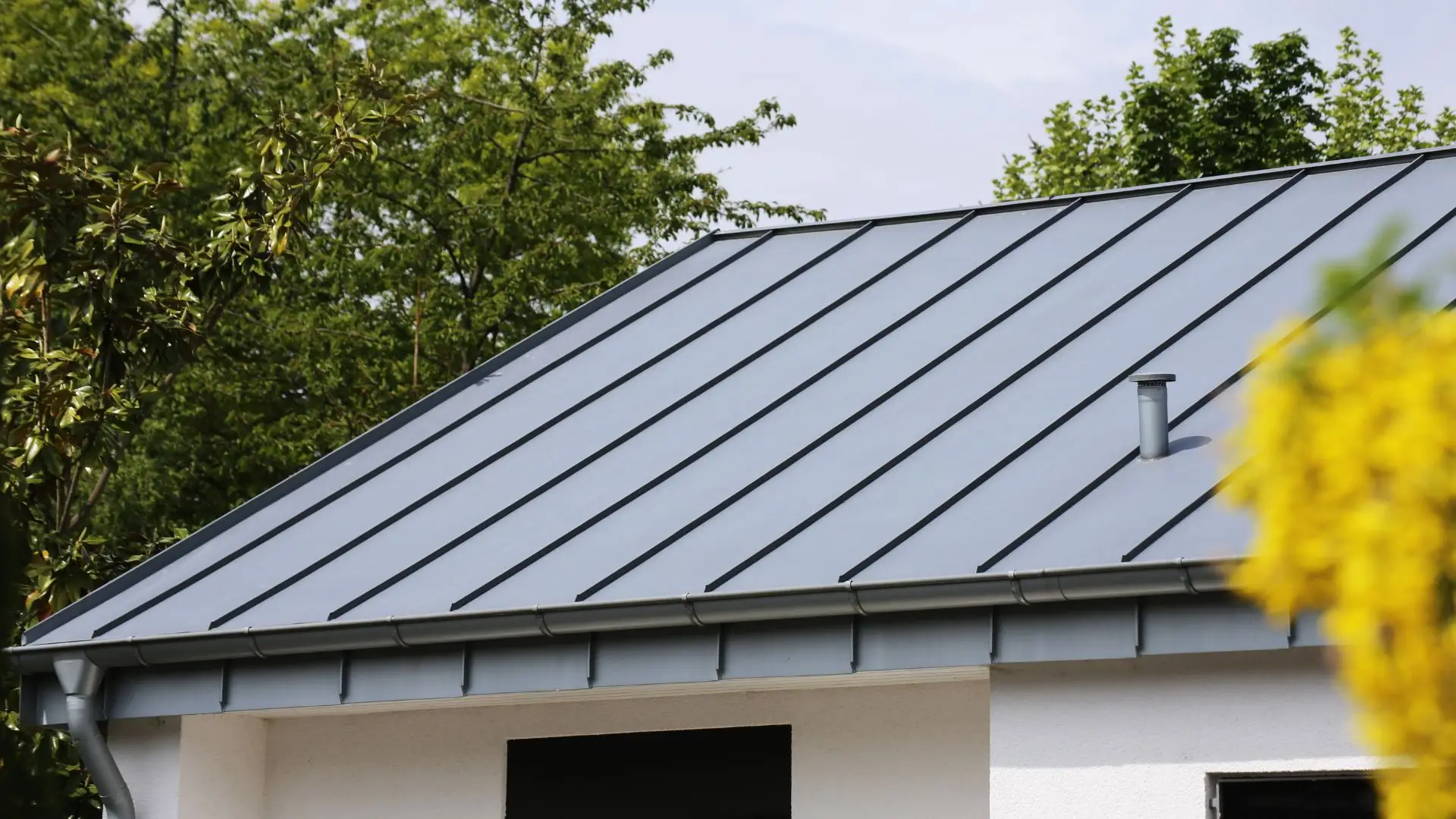
When people compare metal roofs to shingles, they’re usually picturing one type of metal roof. In reality there are a few, and they’re not all built the same way. That distinction ends up mattering a lot once you get into cost and longevity.
When people say “metal roof,” they’re usually picturing one of three very different systems:
That distinction, standing seam versus exposed fastener, matters more than people expect, and it’s the part that’s easiest to overlook if you’re not familiar with roofing materials.
Here’s what’s actually holding an exposed fastener roof on to the house: metal screws, each one sealed with a small rubber washer between the screw head and the panel that keeps water from working its way into the hole underneath.
That rubber washer does a lot of work over the life of the roof. Like most rubber components exposed to sun and temperature swings, it breaks down over time. Not usually for years, but it’s a wear component rather than a permanent seal. Once it starts to crack or shrink, there’s a path for water to work its way in around the fastener. Each one also allows room for human error. If it is not driven straight against the panel then the washer is not pressed evenly allowing a gap for water entry. Overdriving or underdriving on each of those screws could also lead to the washers not fully doing their jobs.
The system relies on a large number of individual seal points rather than one continuous barrier. A roof can easily have hundreds of fasteners, and each one is a small potential entry point for water over the life of the roof.
Standing seam roofs avoid this issue since the fasteners are concealed rather than exposed to the weather. That’s a real advantage, and it’s part of why standing seam is typically priced higher than other metal options.
Fastener wear isn’t the only factor worth knowing about with metal roofing. Over time, most metal roofing will show oxidation, and painted or coated finishes can fade or chalk from years of UV exposure. Imagine a car setting outside in the sun over 10 years, now 15, now 20. No protection at all from the elements. Would you expect to see color fading and patchiness? This happens with roof panels as well.
Hail is another factor. Metal roofing generally holds up well against hail in terms of keeping water out in the moment, but a hail strike can still dent the panel, and that dent can stretch or crack the factory coating that protects the metal underneath. Once that coating is compromised, the exposed metal is more vulnerable to rust developing at that spot over time. Deeper dents can also create small low points where water and debris collect instead of draining off, which can accelerate wear in that area. Punctures are rare and generally require a very large hail stone combined with a thin gauge panel, but when they happen, they’re an issue that needs to be addressed right away.
This isn’t to say metal performs poorly in hail. It’s more that the damage doesn’t always stop at the dent itself. What looks like a minor cosmetic mark after a storm can be the starting point for coating and rust issues down the road if it goes unaddressed.
Asphalt shingles don’t rely on individual mechanical fasteners exposed to the weather. They’re installed as an overlapping system, layered so each course covers the fasteners of the one below it, which is a simpler approach with fewer individual points that need to seal perfectly against water.
Shingles also come in more variety than people usually expect. Architectural (or “dimensional”) shingles, the most widely used style today, are made with better materials than older shingles and have a wide range of colors and profiles to match different home styles.
Because shingles are one of the most common roofing materials in the country, they’re also straightforward to repair or partially replace. If a section gets damaged by a tree for example, a roofer can typically match and replace just that area rather than needing to source or fabricate a full panel. This tends to make maintenance simpler and more affordable over the life of the roof.
Warranty length is one detail worth knowing about before assuming metal automatically wins on longevity. It’s not uncommon to find shingle manufacturers offering warranties that are considerably longer than what’s available on an exposed fastener metal roof. That tends to catch people off guard, since it runs against the general assumption that metal roofing always comes with better long-term coverage. The most common workmanship warranties for exposed fastener roof systems are 1 or 2 years whereas quality roofing contractors commonly offer warranties in the 5 to 10 year range. Standing seam roofs can often have workmanship warranties similar to a quality asphalt shingle.
Warranty terms are generally set based on how a contractor expects a product to perform over time, so they’re a useful, fairly objective data point to factor in alongside price and appearance when you’re comparing materials.
Honestly, the right answer depends on your roof, your budget, and what matters most to you long term. There’s no one-size-fits-all pick here, and that’s exactly the kind of thing that’s hard to sort out from a blog post and a lot easier to sort out by having someone actually look at your roof.
At Red-tail Roofing, we’ll walk you through what’s on your house now, what your options actually cost (not just the sticker price, but the long-term picture), and help you land on the system that makes sense for you and your budget.
Give us a call at (816) 200-1845 for a free inspection and no obligation, no pressure quote.
Expand your roofing knowledge with these hand-picked insights.
What to Do After a Tree Falls on Your Roof: A Homeowner’s Guide A fallen tree on your roof needs...

Most people shop for homeowners insurance by comparing a few numbers: premium, deductible, coverage amount. Seems simple enough. But several...
When people compare metal roofs to shingles, they’re usually picturing one type of metal roof. In reality there are a...